
KPV Peptide Mechanism of Action: A Research-Based Overview

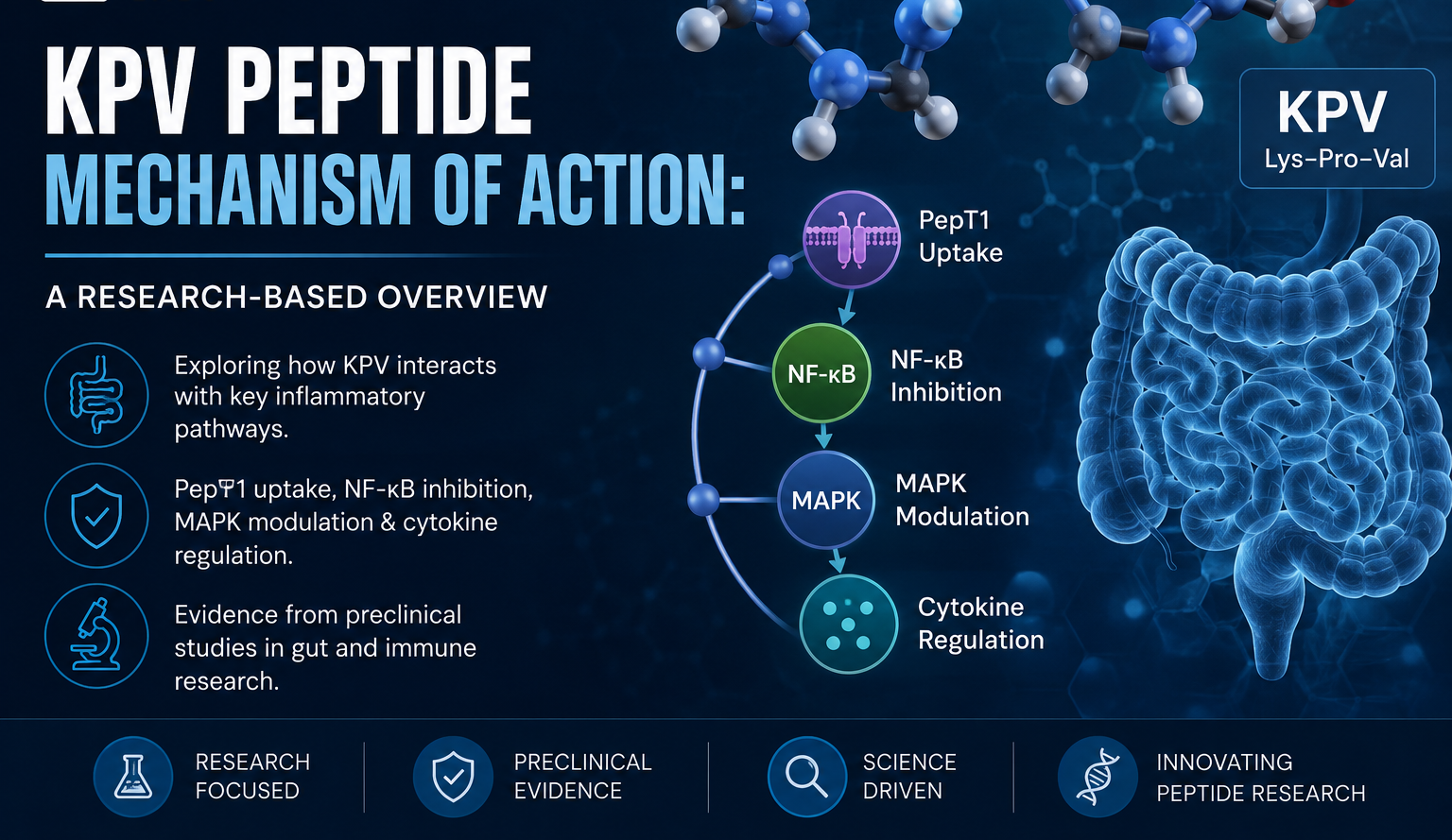
KPV Peptide Mechanism of Action: A Research-Based Overview
KPV peptide is a naturally derived tripeptide made up of lysine, proline, and valine. It represents the C-terminal sequence of α-melanocyte-stimulating hormone (α-MSH) and has become an interesting subject in peptide research because of its potential interaction with inflammatory signaling pathways.
Current evidence is primarily preclinical, with research focusing on cellular and animal models rather than established human therapeutic applications.
What Is KPV Peptide?
KPV is a three-amino-acid peptide:
Lysine (K) – Proline (P) – Valine (V)
Researchers have investigated KPV because some biological activities associated with α-MSH appear to be retained in this smaller peptide. Unlike the complete α-MSH molecule, however, KPV appears to influence inflammation through mechanisms that are not primarily dependent on conventional melanocortin receptor activation.
How Does KPV Work?
Research suggests that the KPV peptide mechanism of action may involve several interconnected pathways.
1. PepT1-Mediated Uptake
One of the most notable findings is KPV’s interaction with PepT1, a peptide transporter found in intestinal epithelial cells.
Experimental research indicates that PepT1 can transport KPV into cells, potentially allowing the peptide to influence intracellular inflammatory signaling.
2. NF-κB Signaling
NF-κB is an important regulator of inflammatory gene expression.
In experimental intestinal-cell models, KPV has been associated with reduced NF-κB activation following inflammatory stimulation. This has made the NF-κB pathway an important focus of KPV peptide research.
3. MAPK Pathways
KPV has also been investigated for its effects on MAPK signaling, including ERK, JNK, and p38 pathways.
These pathways participate in cellular responses to inflammatory and stress-related signals. Experimental findings suggest KPV may reduce activation of some of these pathways under specific laboratory conditions.
4. Inflammatory Cytokine Signaling
Research has also examined KPV’s influence on inflammatory mediators such as IL-8 and other cytokine-related signals.
These findings suggest that KPV may affect inflammatory responses at multiple stages rather than acting through a single biological pathway.
KPV Peptide and Gut Research
The relationship between KPV and intestinal inflammation is one of the most studied areas of its preclinical research.
Laboratory studies have investigated KPV in intestinal epithelial cells and experimental models of colitis. Findings have included changes in inflammatory signaling and cytokine expression.
A proposed mechanism can be summarized as:
KPV → PepT1 uptake → NF-κB/MAPK modulation → altered inflammatory signaling
However, these findings come largely from preclinical research and should not be interpreted as proof of therapeutic effectiveness in humans.
KPV vs. α-MSH
KPV is directly related to α-MSH because it represents its C-terminal tripeptide sequence. However, the two molecules are not biologically identical.
While α-MSH can interact with melanocortin receptors, available KPV research suggests that PepT1-mediated uptake and intracellular signaling pathways may be more relevant to KPV’s observed activity.
What Does Current Research Tell Us?
Research to date suggests that KPV may interact with:
- PepT1 peptide transport
- NF-κB signaling
- MAPK pathways
- Inflammatory cytokine signaling
- Intestinal epithelial responses
These findings make KPV an interesting molecule for continued laboratory investigation.
However, important questions remain regarding its pharmacokinetics, stability, long-term safety, precise molecular targets, and relevance to human biology.
Conclusion
The KPV peptide mechanism of action is an emerging area of research. Experimental evidence suggests that KPV can influence inflammatory signaling through mechanisms involving PepT1, NF-κB, MAPK pathways, and inflammatory mediators.
While these findings are scientifically promising, most available evidence remains preclinical. Further research is needed to fully understand KPV’s biological activity and potential applications.
Frequently Asked Questions
What is KPV peptide?
KPV is a three-amino-acid peptide consisting of lysine, proline, and valine and represents the C-terminal sequence of α-MSH.
How does KPV peptide work?
Preclinical research suggests KPV may influence inflammatory signaling through PepT1 uptake and pathways including NF-κB and MAPK.
Has KPV been studied for gut inflammation?
Yes. Researchers have investigated KPV in intestinal-cell and animal models of inflammation, including experimental colitis.
Is KPV clinically proven?
No. Current evidence is predominantly preclinical, so further human research is needed to establish clinical effects.